Tobacco Website Privacy in Australia: APPs, Cookies & the Tobacco Act Explained
Practical Australian checklist to meet the APPs and the Tobacco Act: map trackers, limit retention, prepare NDB responses, and review Cigarette Central as a compliant retailer.


Quitting reduces your risk of cancer.
+18 Only – Call Your Local Quitline
BEST SELLING, Cigarettes, Davidoff Cigarettes, New Arrival, TOP TRENDING
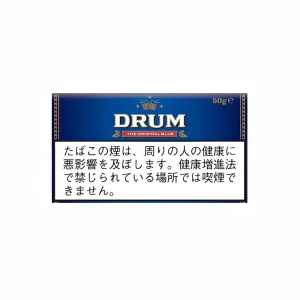
Quitting reduces your risk of cancer.
+18 Only – Call Your Local Quitline
BEST SELLING, Drum Blue Tobacco, Tobacco, TOP TRENDING

Quitting reduces your risk of cancer.
+18 Only – Call Your Local Quitline
BEST SELLING, Golden Virginia Tobacco, Tobacco, TOP TRENDING
Ask a Question
Which Legal Frameworks Govern Tobacco Website Privacy in Australia?
Two separate legal regimes apply to online tobacco retail in Australia: the Privacy Act 1988 with its Australian Privacy Principles (APPs), and the Public Health (Tobacco and Other Products) Act 2023. The Privacy Act governs how personal information is handled; the Tobacco Act governs what can be advertised and where.
Running a compliant tobacco website means addressing both. The Privacy Act asks what happens to a customer's data; the Tobacco Act asks what is shown on the product page and how it is marketed. They are separate obligations, not one combined rule.
The two frameworks address different problems:
- The Privacy Act governs what happens to a customer's data from the moment they "check out".
- The Tobacco Act governs what can be shown, described, or promoted online.
What the APPs Require of a Tobacco Website Privacy Policy
APP 1 through 13 set out the minimum content required in a privacy policy, and the OAIC's quick reference guide translates those requirements into a plain-English checklist for any Australian business.
- What's collected — name, delivery address, date of birth for age verification, payment tokens, and site analytics.
- How it's collected and held — directly at checkout, through ad targeting pixels, or via analytics tools, and where it is stored.
- Why it's collected — order fulfilment, fraud prevention, marketing communications or site optimisation.
- Who it's disclosed to — courier and payment providers, marketing tools, and any overseas-based service providers.
- How to access or correct their information — and how to lodge a complaint if something goes wrong.
The policy should be published as a standard page, written in plain English, and clearly linked from the footer of the site. Customers should be able to find it without digging through a menu.
Pro tip: Lay out the privacy policy as a short, plain-English summary at the top, with the full policy available as a downloadable document. That structure satisfies both the casual reader and the regulator.
Tracking Pixels, Cookies and Analytics: Disclosure and Fairness
Tracking pixels aren't banned in Australia, but the OAIC's guidance from November 2024 makes it clear that businesses should not use them to collect data without telling users. For a tobacco website, that means:
- Mapping every tracking tag on the site, including re-targeting pixels from ad platforms.
- Naming the tools and their purpose in the privacy policy, not just a vague "we use cookies".
- Documenting who reviewed the tag list and when.
- Showing clear opt-out tools, and honouring them.
If a tracker can store cookies, "we use cookies to improve your experience" is not enough. The policy needs to be specific.
Data Breaches and the Notifiable Data Breaches Scheme
An incident becomes a "notifiable data breach" when unauthorised access, disclosure, or loss of personal information is likely to cause serious harm. Under the Notifiable Data Breaches scheme, both the OAIC and the affected individuals must be notified.
By the numbers, the notification threshold is set at "as soon as practicable" once a breach is discovered. There is no fixed day-count in legislation, but delay itself can become a compounding problem.
Operators should:
- Assess the breach quickly, contain it, and document what was accessed.
- Notify affected customers when warranted.
- Report to the OAIC when the harm threshold is met.
- Review the incident and update internal processes so it doesn't recur.
In practice, this means keeping personal data minimised, retained only as long as necessary, and access controlled at all times.
Online Tobacco Advertising, Point-of-Sale Rules and Buying Online in Australia
Whether a tobacco website can legally advertise its products, and whether you can legally buy from it, are two different questions answered by two different regulators. The Department of Health's guide to online point-of-sale advertising sets out what is allowed on a product page, and what is not.
Plain packaging rules flow through to the digital shelf too. Any lifestyle imagery, testimonials, or social media integration that implies a "premium" or "luxury" angle can breach the Tobacco Act.
Watch for these signs that a page has crossed from information into unregulated advertising:
- "Buy 2, get free" style discount framing.
- Lifestyle photography or influencer-style content around the product.
- Prominent social sharing buttons or review widgets integrated into the product page.
Practical Checklist for Tobacco Websites and Privacy-Conscious Shoppers
If you run a tobacco website, work through this before you go live or review your compliance now:
- Publish a layered privacy policy and plain-English summary.
- Map every data flow, from browser through to internal systems and support tickets.
- Name the owners responsible for each data type, and set retention rules.
- Document how marketing tags are tested and controlled.
- Have a clear process for responding to customer data requests.
- Prepare an incident response procedure for the NDB scheme, including who notifies who, and when.
- Publish age-verification procedures on-site, since these matter for both compliance and consumer trust.
If you're the shopper, check that the site explains its data practices clearly. If the policy is buried, the site is likely to be uncompliant, and possibly not something you should trust.
Cigarette Central: What It Offers and Where Privacy Information Lives
Cigarette Central supports its selling proposition with clear terms around data handling. The site's privacy policy and product pages are both published as standard pages, and the checkout process asks for the minimum data needed to complete an order.
How Cigarette Central product pages treat privacy: what to check
Product listings vary in how much privacy-relevant detail they surface, and it's worth comparing across a catalogue rather than judging a single page. The following list shows how privacy surfaces on a typical product page:
- Premium Loose Tobacco 500g — Rich blend, smooth rolling experience, with clear dispatch and privacy statements tied to the checkout step.
- Premium Loose Tobacco 1kg — The most popular bulk option, with a checkout workflow that handles personal data at the payment and dispatch stages.
- Esse Light Super Slim Cigarettes 20s x 10 packs — A multi-pack of slim, mild Korean-style cigarettes with the same disclosure commitments as other lines.
Where a listing contains any promotional copy or imagery not consistent with the Tobacco Act, the site's own privacy policy and checkout flow are the more reliable indicators of legal compliance.
Specific Privacy Considerations for Minors Accessing Tobacco Websites
Age verification starts at the point of sale, and it's also where the biggest privacy trade-off occurs. A well-built system has three components:
- A "soft gate" that verifies self-declared age at the point of entry, with the customer providing their date of birth before browsing.
- A "hard gate" at checkout, where stronger verification occurs, often via third-party identity services.
- A robust complaint process for users who can't verify their age but want to raise a concern.
Website operators should design data minimisation into the age-verification flow itself. The more personal data collected at that step, the greater the compliance burden later.
Guidance on Data Minimisation and Retention Practices for Tobacco Websites
Data minimisation means collecting only what is needed for the transaction in front of you, and one of the clearest examples is order confirmation. A retailer should not be collecting a birth date to verify age, then holding onto it for two years afterwards.
On the data-retention side, the OAIC's guidance on privacy policy content expects that the policy should explain how long data is held and how it is destroyed once no longer required. In practice, this should be a specific and documented retention period, not a vague statement about "as long as necessary".
Practical steps to reduce risk:
- Collect only the minimum data required, and document that decision.
- Delete transaction data after the retention period, or anonymise it.
- Consider whether to store payment tokens, or to rely entirely on the payment processor.
- Keep marketing databases separate from order records, so unsubscribing does not require a full audit of internal systems.
- Set a default retention period and apply it consistently, rather than treating it as an ad-hoc process each time.
Editorial Perspective: Balancing Privacy, Compliance and Shopper Discretion
Most privacy policies are written to satisfy regulation, not to inform customers. When a policy is difficult to read, customers stop trusting it, and that trust gap becomes a business problem as well as a compliance one.
The best-run tobacco websites make their policies readable, link them prominently, and treat privacy as a design feature rather than an afterthought. For customers, a readable privacy policy is one of the clearest signals of a legitimate seller.
Shopping With Privacy in Mind at Cigarette Central
Cigarette Central is built around the principle that privacy and discretion matter as much as price for many adult smokers. The site uses secure payment processing, doesn't store card data on its own servers, ships in discreet packaging, and offers tracking on every order. Customer support is available if you have questions about how your personal data is handled before, during, and after placing an order.
If you want to browse a compliant tobacco retailer that takes privacy seriously, check the Cigarette Central privacy policy, review the checkout steps, and then place an order with confidence.
Frequently Asked Questions
Is it illegal to buy tobacco online in Australia?
It depends on what you are buying and whether the seller is compliant. Some jurisdictions restrict or prohibit online tobacco sales outright, so check your local rules before ordering.
Do I need a privacy policy on my website in Australia?
If your business has an annual turnover above $3 million, it must comply with the Privacy Act. Smaller businesses may still be required to comply if they trade in personal information or are related to a larger entity. A well-drafted privacy policy is the standard starting point.
Is tobacco advertising banned in Australia?
Tobacco advertising is heavily restricted, but not entirely banned. The Department of Health's guide sets out what is permissible and what falls under prohibited advertising, including on-pack and price-related marketing.
What is the new tobacco law in Australia?
The Public Health (Tobacco and Other Products) Act 2023 came into force on 1 April 2024 and introduced new rules on advertising, packaging, and online sales. Compliance deadlines vary by line item, so check the latest guidance.
What does Cigarette Central charge for shipping?
Shipping rates and options are listed on the checkout page and in the site's shipping policy. Free shipping thresholds and express options are disclosed before you confirm your order.
18+ only. Quitting improves your health. Call Quitline 137 848.